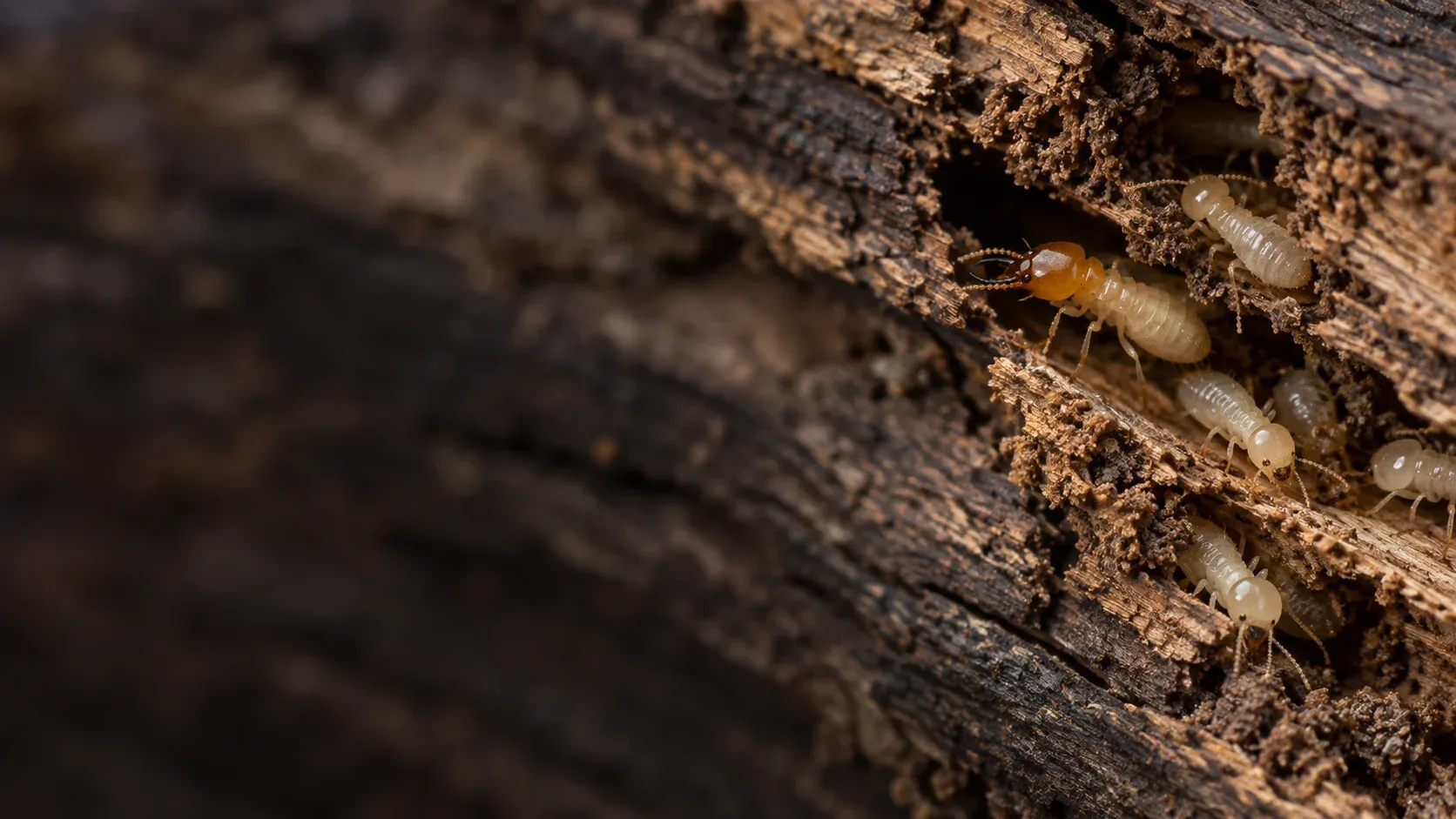
Leave the termites, mud tubes and affected timber undisturbed. Avoid spraying, breaking open the area or removing timber before getting advice. Note where you found the activity and contact us to discuss an inspection. If you can take a photo without disturbing the area, it may help explain what you've noticed.
Termite management in Burpengary East
Small signs.
Time to look closer.
Termite inspections and management for homes and businesses in Burpengary East and surrounding areas. A plan matched to the termites, where they're active and how your building is constructed.
Start with an inspection
Identify the termites and activity.
A plan for your property
Matched to the termites and building.
Think long term
Ongoing checks and protection.
Your home.
Your investment.
Worth looking after.
The problem
The damage can start out of sight.
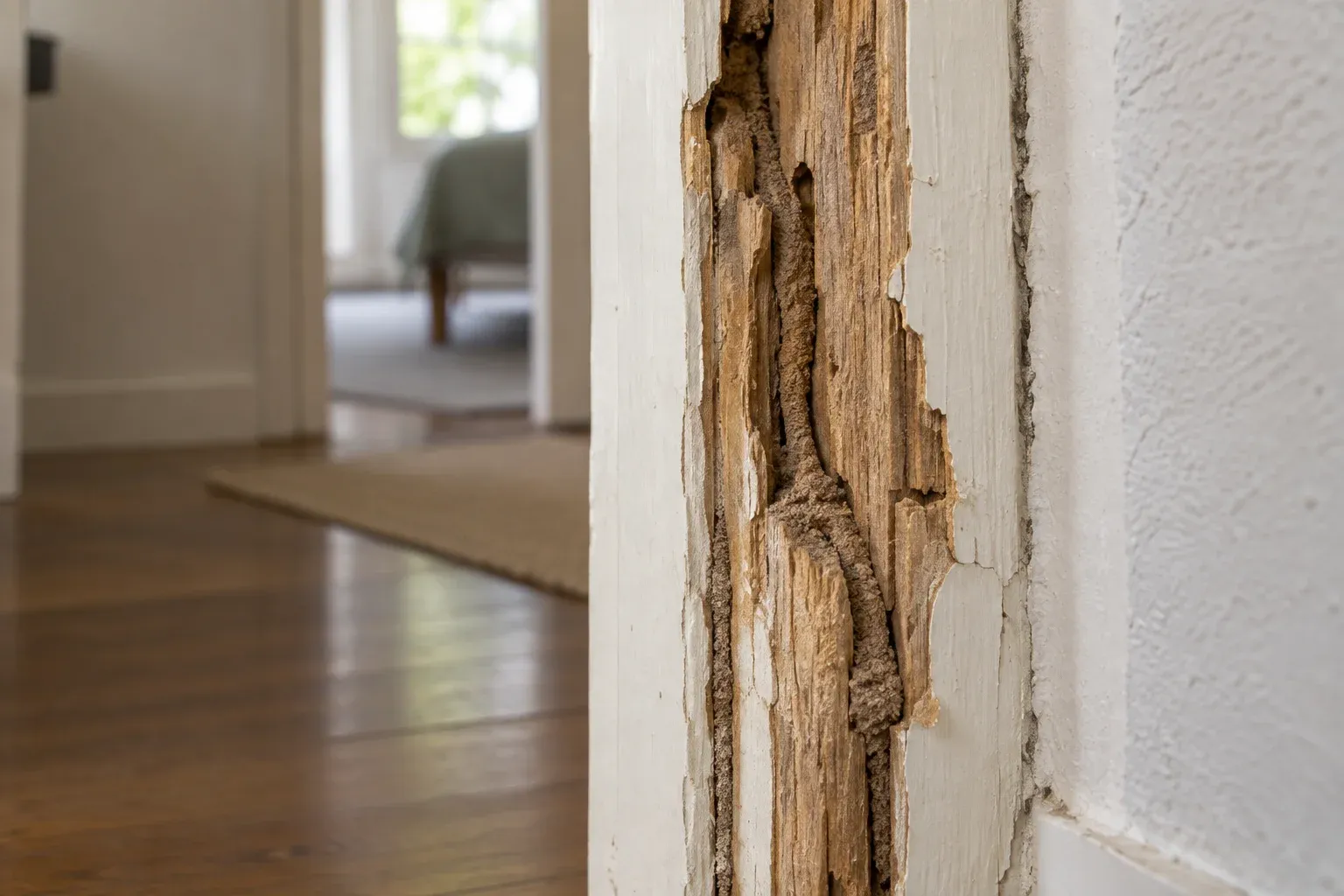
Termites can feed inside timber while the surface appears intact. By the time you notice a change to a skirting board, door frame or floor, there may be more to investigate beneath the surface.
Whether you've found a suspicious mud trail or it's time for a routine check, an inspection helps you understand the signs and plan what happens next.
Found live termites? Leave the area undisturbed and contact us for advice before spraying, opening up timber or removing the affected material. Disturbed termites can retreat from the area, making it harder to trace where they're coming from.
Understand the risk.
Signs worth checking
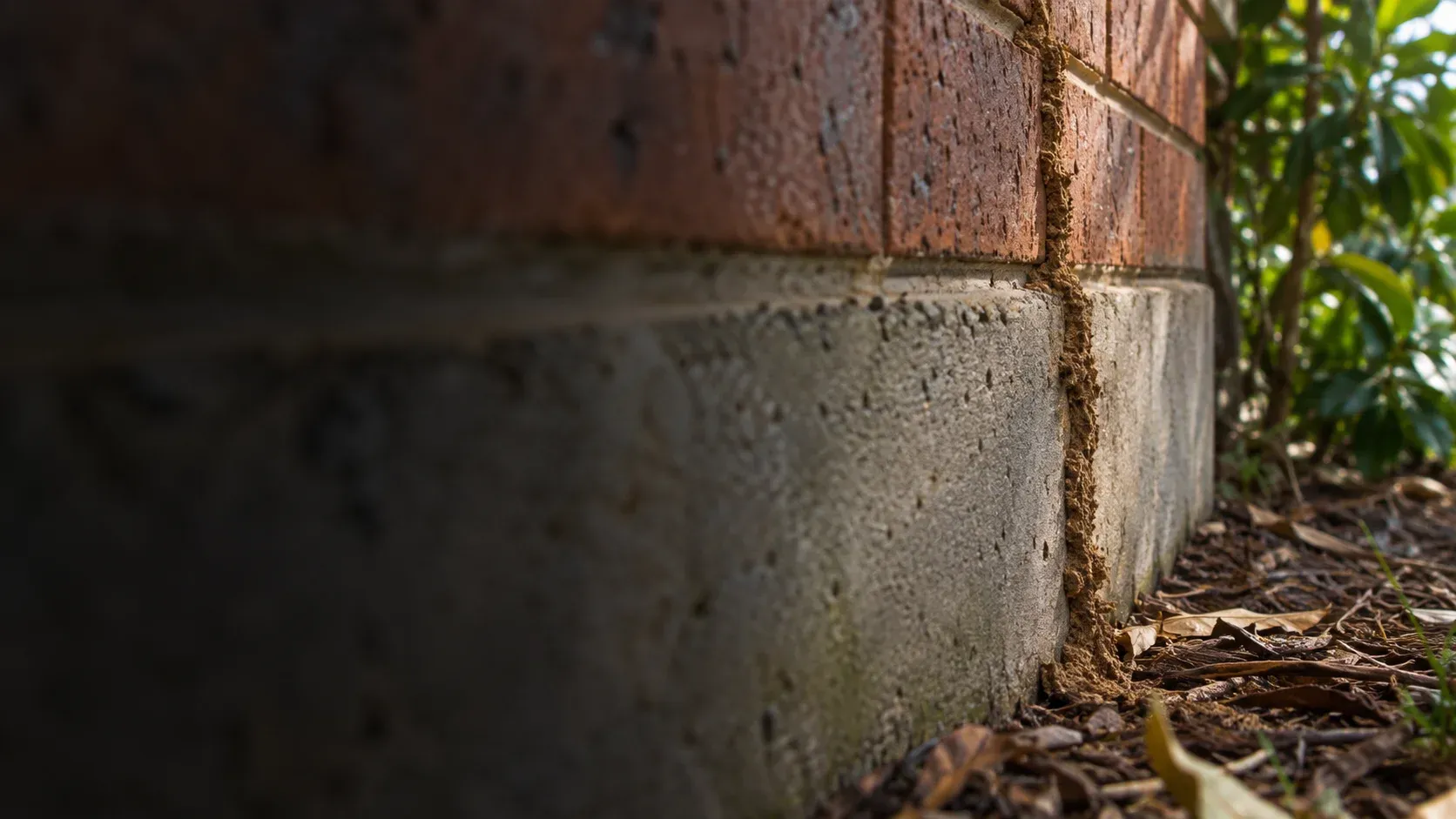
Mud tubes and trails
Earthy shelter tubes on foundations, walls or timber can be a sign of subterranean termite activity.
Changes to timber
Unexplained timber damage, hollow-sounding wood, blistered surfaces or small piles of dry pellets are reasons to arrange an inspection.
Flying insects or shed wings
Winged termites or discarded wings near windows and doors can be a clue. Identification helps distinguish them from flying ants.
Prevention
No single treatment fits every termite problem.
Termites don't all behave the same way. Most damage to homes comes from subterranean termites, which travel from the soil to timber through mud tubes and hidden tunnels. Some species keep one central nest in a tree or stump and can forage a long way from it. Others spread across several nests and can keep going if one is lost. Drywood termites live entirely inside timber and don't need contact with the soil. Where the activity is matters too: in a wall, subfloor or roof space, in a fence or garden tree, or where an extension meets the original building. So does how the building is constructed and whether it already has a termite management system. We consider all of this before recommending treatment, so the plan suits your property rather than a standard package.
- Identify the termites and inspect accessible areas for activity and damage
- Look at construction, moisture, timber contact and likely entry routes
- Recommend treatment suited to the termites, the activity and your building
- Plan follow-up inspections and ongoing protection
Look closer.
Plan ahead.
Protect what matters.
Our process
A clear plan for the next step.
From the first inspection to ongoing checks, know what's recommended for your property and why.
Inspect & assess
Tell us what you've noticed. We inspect accessible areas, identify the termites and explain what we've found.
Agree on a plan
We tailor the plan to the termites, where they're active, the building and any existing system. You'll know the recommended treatment, preparation and cost before work begins.
Treat & monitor
Carry out the agreed work and discuss follow-up visits, system maintenance and practical changes that help reduce the risk of future activity.
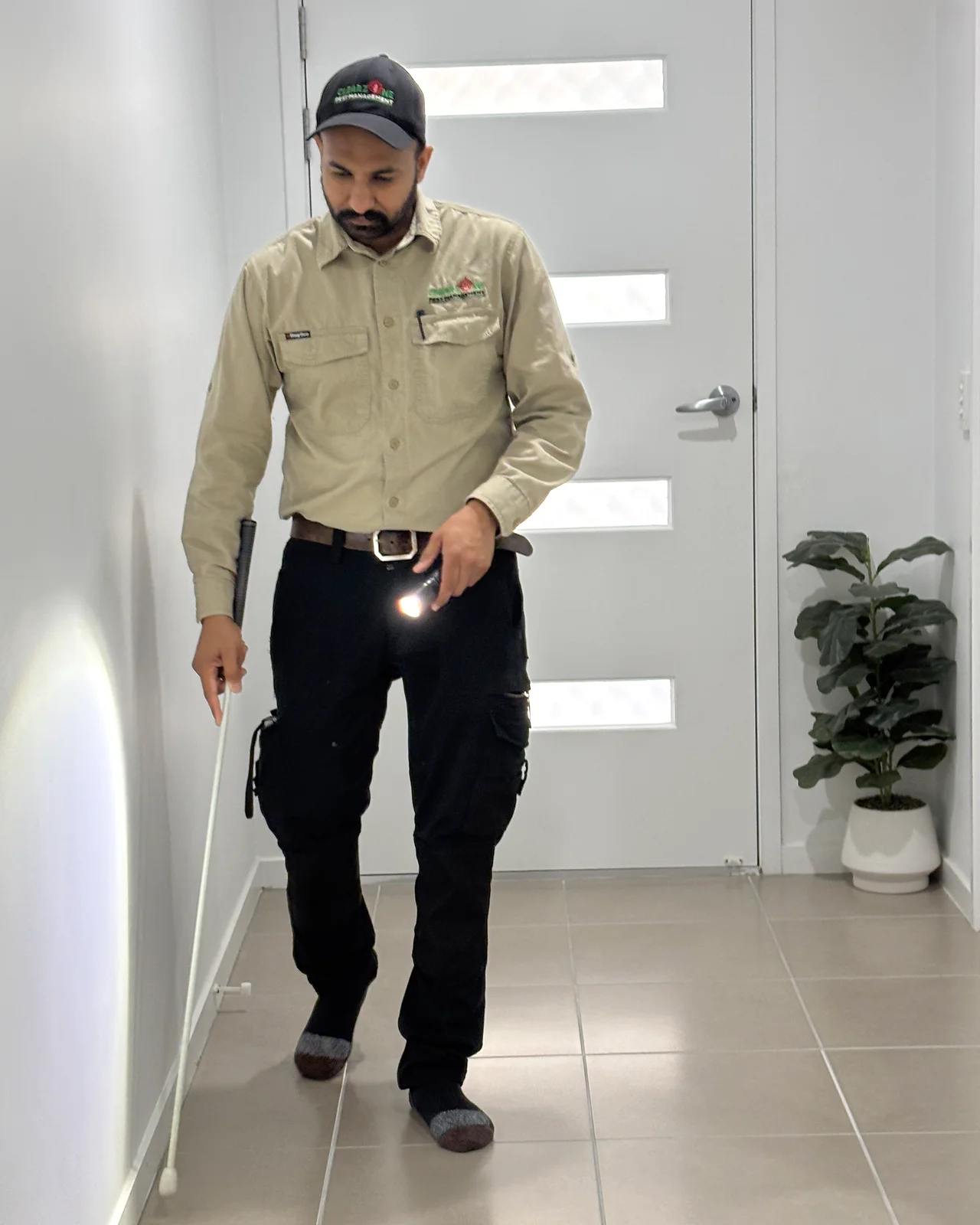
Termite inspections
Looking for what's easy to miss.
A termite inspection looks for evidence of termites, damage and conditions that may increase the risk in accessible areas of your property.
We check timber such as skirting boards, door frames and floors, and look at moisture, timber contact and likely entry routes. Then we explain what we found and what we recommend next.

Frequently asked questions
Termite Management FAQs
The City of Moreton Bay recommends annual termite inspections by a licensed pest control company. Your property or termite management system may need more frequent checks. Follow the advice for your situation, and arrange an inspection sooner if you notice possible activity.
No. An inspection looks for evidence of termites, damage and conditions that may increase the risk in accessible areas. Treatment is a separate step, recommended where needed and agreed with you.
There's no single treatment for every termite problem. The right approach depends on the type of termite, where the activity is, how far it has spread, how the building is constructed and whether a termite management system is already in place. We'll explain the options that suit your property, what each involves and the ongoing checks and maintenance needed.
Different termites nest, travel and feed in different ways. Some subterranean termites keep one central nest in a tree or stump and tunnel a long way to reach timber. Others spread across several nests and can rebuild if one is lost. Drywood termites live inside timber without soil contact and leave small, dry pellets rather than mud. Identifying the termites helps us choose an approach that suits them and your building.
Address leaks and drainage problems, keep stored timber away from the house and avoid covering inspection zones with garden beds, mulch or stored items. Arrange regular inspections and maintain any existing termite management system. Discuss landscaping or building changes first if they could disturb that system.
Tell us about children, pets and any specific concerns when you enquire. We'll explain how to prepare, which areas to keep clear and when you can use treated spaces again.
Regular inspections, system maintenance and managing moisture around the building support ongoing termite protection. We'll explain the inspection schedule and maintenance requirements for your property and any system in place.
Request a free quote and tell us your suburb, the signs you've noticed and whether you have an existing termite management system or inspection report. We'll explain the next step and any inspection fee before you book.

Concerned about termites?
Start with a conversation.
Tell us what you've noticed or ask about a routine termite inspection. Get advice and a free quote for your property in Burpengary East and surrounding areas.